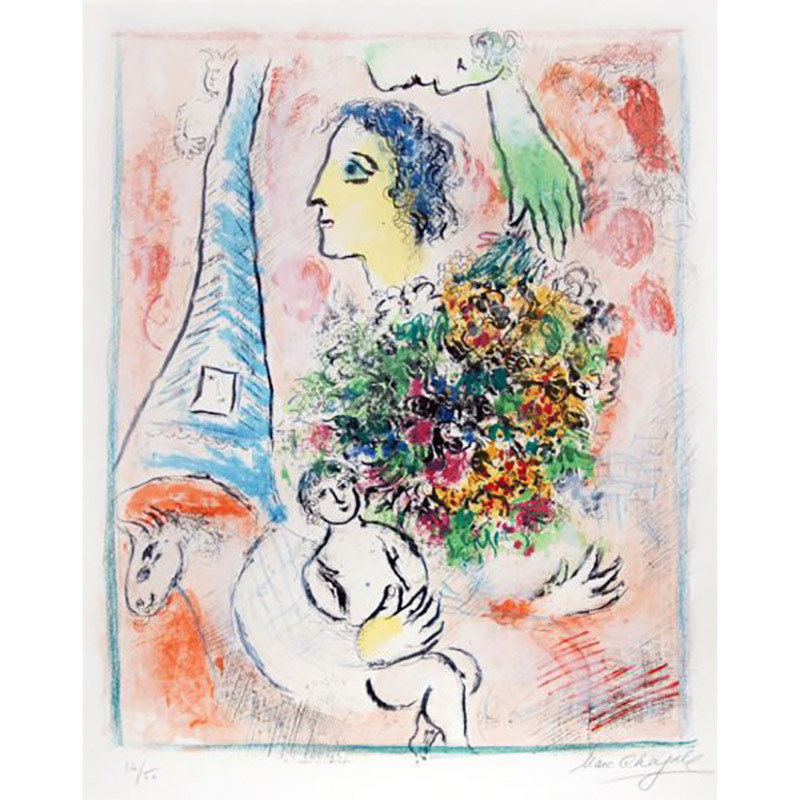
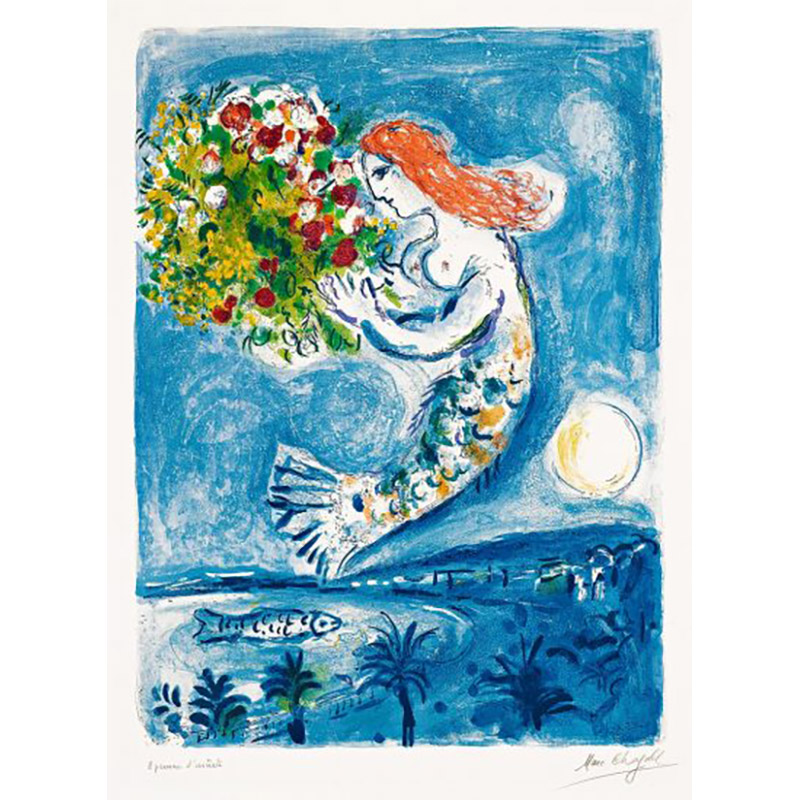
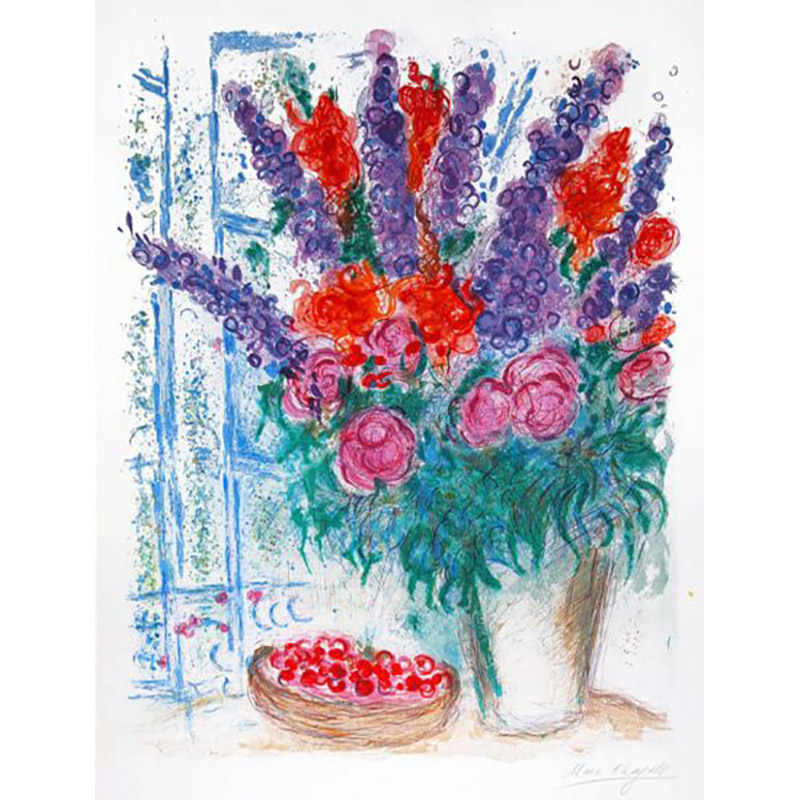

Before making a direct purchase offer for a Marc Chagall, we review the exact artwork, its medium, edition, condition, provenance and current market. Correct identification is especially important with Chagall because original lithographs, signed editions, unsigned book lithographs, works after Chagall and reproductions can have very different values.
Our review helps determine exactly what you own, how it compares with relevant recent sales and whether it is a Marc Chagall we are currently interested in acquiring.
1. We Identify the Exact Marc Chagall
For Chagall lithographs and other prints, we review details such as:
- Title and date
- Medium
- Image and sheet dimensions
- Signature
- Edition number or proof designation
- Printer and publisher
- Paper
- Stamps or inscriptions
- Mourlot, Sorlier or Cramer catalogue reference
A recognized catalogue raisonné reference can help establish which documented edition the artwork belongs to. Mourlot references are particularly important for Chagall lithographs, while Cramer references are often useful for illustrated books and portfolios.
A catalogue number alone does not establish the authenticity of a specific physical impression. The artwork itself should correspond with the documented edition.
2. We Determine Whether It Is an Original Chagall Print
Chagall imagery has been reproduced extensively, so one of the first questions is whether the work is an original lithograph, etching or other documented print rather than a poster or later reproduction.
We consider the printing technique, paper, dimensions, edition structure, signature, margins, publisher information and catalogue documentation.
An unsigned Chagall is not automatically a reproduction. Many authentic original lithographs were issued unsigned in books, portfolios and publications such as Derrière le Miroir.
3. We Review Signature, Edition and Proof Type
For works intended to be signed, a hand-signed impression can occupy a different market from an unsigned example.
We review:
- Signature placement
- Edition number
- Total edition size
- Artist’s Proof or other proof designation
- Whether the edition was documented as signed or unsigned
The edition number itself is generally less important than the edition type, condition, provenance and overall demand for the image.
4. We Review Condition and Color Quality
Condition can materially affect the value of a Marc Chagall lithograph.
We look for:
- Fading or color loss
- Toning or staining
- Foxing
- Creases
- Tears
- Trimming
- Mounting or tape residue
- Restoration
- Damage to margins
Color freshness can be especially important. Chagall’s color lithographs are vulnerable to light exposure, and impressions retaining strong original color can be more desirable. Christie’s specifically notes that Chagall prints with fresh color can command premiums because many surviving impressions have faded over time.
5. We Review Provenance and Documentation
Provenance can help establish the history of the artwork and support buyer confidence.
Useful documentation may include:
- Gallery invoices
- Auction records
- Collection history
- Estate documentation
- Labels
- Certificates
- Conservation reports
- Previous correspondence relating to the work
Not every Chagall has complete documentation, so missing paperwork does not automatically prevent us from evaluating the artwork.
6. We Research Recent Comparable Sales
We compare the artwork with recent sales of the same or closely related Chagall.
The most relevant comparisons generally consider:
- Exact image or series
- Medium
- Mourlot or other catalogue reference
- Signature
- Edition and proof type
- Condition
- Margins and sheet size
- Provenance
- Current availability
Recent Chagall market data shows why specificity matters: signed lithographs, unsigned book plates, proof impressions and complete portfolios can trade at very different levels.
7. We Evaluate Current Collector Demand
Past auction results are only part of the picture.
We also consider whether similar examples are currently available, how frequently the artwork appears on the market and whether collectors are actively seeking the particular image, subject, series or edition.
Our purchasing interest may also depend on current inventory and whether we are already looking for a particular Marc Chagall work for a collector.
8. We Make a Direct Purchase Offer When Appropriate
If the Marc Chagall is a work we are interested in acquiring, we may make a confidential direct purchase offer.
If additional photographs, documentation or a physical inspection are needed before confirming an offer, we will explain what is required.
There is no obligation to sell simply because you requested a valuation.
What Should I Send for a Marc Chagall Evaluation?
To begin, send:
- Clear photographs of the front and back
- Signature
- Edition number
- Full sheet and margins
- Title and dimensions, if known
- Mourlot, Sorlier or Cramer reference, if known
- Gallery labels or stamps
- Purchase invoices or provenance
- Photographs of any condition issues
If you do not have all of this information, send what you have. We can often begin identifying and evaluating a Marc Chagall from photographs alone.
Ready to Have Your Marc Chagall Reviewed?
If you are considering selling a Marc Chagall lithograph, print, painting, drawing, portfolio or other artwork, send us photographs and any available documentation.
We can help identify the work, review condition and provenance, research recent comparable sales and current collector demand, and determine whether it may be appropriate for a confidential direct purchase offer.