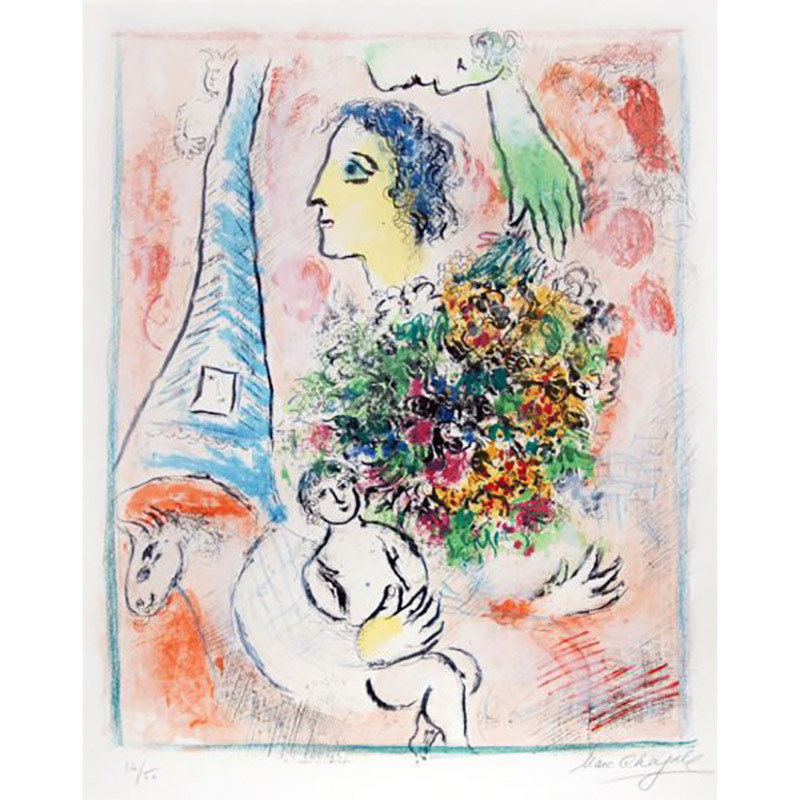
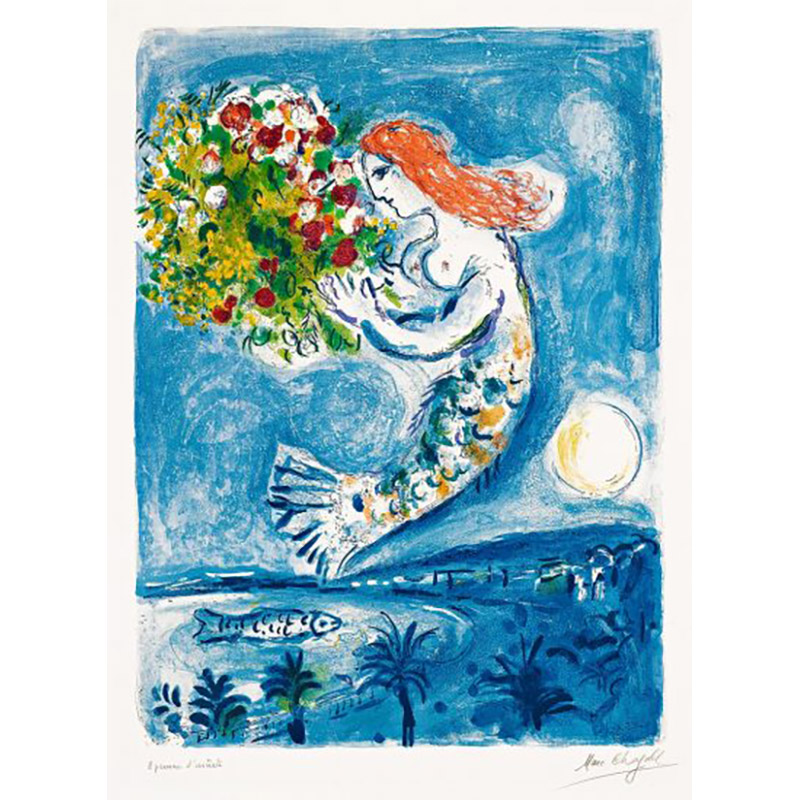
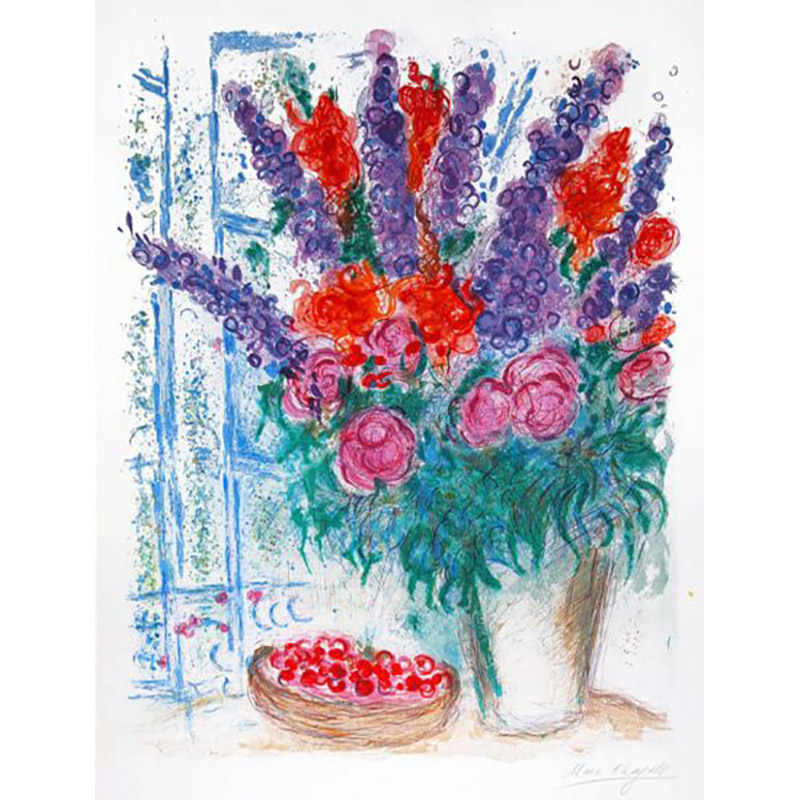

Determining whether a Marc Chagall print is an original lithograph, etching or other documented graphic work requires more than looking for a signature.
Chagall created a large body of original prints during his lifetime, including signed limited editions, unsigned lithographs, illustrated books and complete portfolios. His imagery has also been reproduced extensively in posters, books and decorative prints.
As a result, two works featuring the same Chagall image can have very different origins and market values.
When researching a Marc Chagall print, we look at the catalogue raisonné reference, printing technique, dimensions, paper, edition, signature, printer, publisher, margins, provenance and condition to determine how the work relates to a documented Chagall edition.
1. Original Marc Chagall Print vs. Reproduction
An original Marc Chagall print is a work created as part of Chagall’s original graphic production rather than a later reproduction of another artwork.
Chagall worked extensively in lithography and also produced etchings, aquatints and other graphic works.
A reproduction, poster or decorative print may reproduce an authentic Chagall image but was not necessarily created as an original print edition by the artist.
This distinction is important because an original Chagall lithograph and a later reproduction of the same imagery can occupy very different markets.
2. Check the Marc Chagall Catalogue Raisonné
One of the most important steps in identifying a Marc Chagall print is determining whether it corresponds with a documented catalogue raisonné entry.
Important Chagall references include:
- Mourlot for much of Chagall’s lithographic work
- Sorlier for additional documented lithographs and related graphic works
- Cramer for illustrated books and portfolios
A catalogue entry can provide information such as:
- Title
- Date
- Medium
- Dimensions
- Printer
- Publisher
- Edition
- Whether the work was signed or unsigned
- How the print was originally issued
The physical artwork should correspond with the documented information.
A catalogue number alone does not establish that a particular impression is original.
3. Is the Chagall Signed?
A pencil signature can be an important characteristic of some Marc Chagall editions, but a signature alone does not determine authenticity.
Some genuine Chagall prints were issued hand-signed and numbered, while others were issued unsigned as part of books, portfolios or publications.
When researching a signed Chagall, consider:
- Whether the documented edition was intended to be signed
- Placement of the signature
- Edition number
- Proof designation
- Paper and dimensions
- Whether the work corresponds with the catalogue entry
An unsigned Chagall should therefore not automatically be dismissed as a reproduction.
4. Check the Edition Number and Proof Type
Many Marc Chagall prints were produced in numbered editions.
A typical edition may show a fraction such as 25/75, indicating impression 25 from an edition of 75.
Other works may carry proof designations such as:
- Artist’s Proof
- Épreuve d’Artiste
- Printer’s Proof
- Hors Commerce
- Other documented proofs
Edition size and proof type can influence rarity and market value, but they should always be checked against the documented edition.
An edition number by itself does not prove that a print is original.
5. Examine the Paper, Dimensions and Margins
Paper and dimensions can provide important clues when researching a Chagall print.
A documented catalogue entry may specify:
- Sheet dimensions
- Image dimensions
- Paper type
- Margins
- Printer
- Publisher
Significant differences between the physical work and the documented specifications may require further investigation.
Margins are also important because some Chagall lithographs have been trimmed, mounted or altered after publication.
Do not trim or alter the margins of a Chagall print before having it reviewed.
6. Look for the Printer and Publisher
Chagall worked with important printers and publishers throughout his graphic career.
Information about the printer and publisher may help connect an artwork with a documented edition.
For lithographs, catalogue references frequently provide details about how and where the work was printed and published.
Original folders, justification pages, title pages, publisher information and accompanying documentation can be particularly useful when researching illustrated books and portfolios.
7. Signed and Unsigned Chagall Lithographs
One of the most common misconceptions is that every original Marc Chagall lithograph must be signed.
That is not the case.
Chagall created original lithographs that appeared in books, portfolios and art publications. Many of these were issued without an individual pencil signature.
For example, original Chagall lithographs were published in Derrière le Miroir, the influential French art publication associated with Galerie Maeght.
An unsigned work therefore needs to be identified according to its specific publication and catalogue documentation rather than judged solely by the absence of a signature.
8. Marc Chagall Illustrated Books and Portfolios
Chagall produced several important illustrated-book and portfolio projects.
These can contain original lithographs that differ substantially in format, edition and signature status from separately issued prints.
Important projects include:
- Daphnis et Chloé
- Le Cirque
- The Bible
- The Story of Exodus
- Other documented illustrated books and lithographic portfolios
For these works, details such as the Cramer or Mourlot reference, edition, sheet size, margins and whether the print originally belonged to a complete set can be important.
Individual works removed from a portfolio should be identified according to the edition from which they originated.
9. Original Chagall Lithograph vs. Poster
Chagall’s imagery has appeared on many exhibition posters and later reproductions.
Some Chagall-related posters can themselves have collector interest, but they should not automatically be described or valued as limited-edition original lithographs.
When researching a work that appears to be a poster, consider:
- Printed text
- Exhibition information
- Publisher
- Dimensions
- Paper
- Printing technique
- Catalogue documentation
- Whether Chagall created an original lithographic component specifically for the poster
The exact publication matters.
10. Does Provenance Help Identify a Marc Chagall?
Yes. Provenance can provide useful supporting information about where a Chagall was acquired and how it has been owned.
Helpful documentation can include:
- Gallery invoices
- Auction records
- Original purchase receipts
- Collection history
- Estate records
- Exhibition labels
- Gallery labels
- Previous correspondence
- Conservation documentation
Missing paperwork does not automatically mean a Chagall is not original.
However, established provenance can make researching the work easier and provide buyers with additional confidence.
11. Does Condition Help Determine Whether a Chagall Is Original?
Condition does not determine originality, but it can provide useful information and can significantly affect value.
When reviewing a Chagall work on paper, we look for:
- Fading
- Toning
- Foxing
- Staining
- Creasing
- Tears
- Trimming
- Mounting
- Tape residue
- Restoration
- Changes to the margins
Older paper does not by itself establish authenticity, just as unusually clean condition does not automatically indicate a reproduction.
Condition should be considered together with the artwork’s documentation and physical characteristics.
12. What Should I Send to Identify My Marc Chagall?
If you are unsure whether your Marc Chagall is an original print, send clear photographs of:
- Full front
- Full reverse
- Signature
- Edition number
- Entire sheet and margins
- Printed text or inscriptions
- Stamps
- Labels
- Any publisher information
- Any certificates or paperwork
Also include:
- Exact dimensions
- Where and when the artwork was acquired, if known
- Mourlot, Sorlier or Cramer reference, if known
If you do not have this information, send what you have. Clear photographs are often enough to begin researching the work.
Frequently Asked Questions About Original Marc Chagall Prints
How do I know if my Marc Chagall lithograph is original?
Begin by identifying the exact image and comparing the work with a documented Chagall catalogue raisonné entry. The medium, dimensions, paper, edition, signature, printer and publisher should correspond with the documented edition. A signature or edition number alone is not enough to establish that the work is original.
Are unsigned Marc Chagall lithographs original?
Some are. Chagall created many genuine original lithographs that were issued unsigned in illustrated books, portfolios and publications. The absence of a pencil signature does not automatically mean a Chagall is a reproduction. The exact work and publication must be identified.
What is a Mourlot number on a Marc Chagall?
A Mourlot number is a catalogue raisonné reference used to identify documented Marc Chagall lithographs. It can help establish the title, date, dimensions, edition and publication details of a work. It is an identification reference, not by itself a certificate of authenticity.
Is a numbered Chagall print automatically original?
No. A printed or handwritten edition number by itself does not establish originality. The artwork should correspond with the documented edition in terms of image, medium, dimensions, paper, printing, signature and publication information.
Considering Selling Your Marc Chagall?
If you own a Marc Chagall lithograph, print, portfolio, drawing, painting or other artwork and are considering selling it, send us clear photographs and any information you have.
We can review the work’s identifying characteristics, catalogue information, condition and provenance.
If the Marc Chagall is a work we are interested in acquiring, we can provide a confidential direct purchase offer.
Get a Confidential Marc Chagall Valuation
Send us photographs and any information you have about your Marc Chagall. We can help identify the work, review its catalogue information, condition, provenance and current market, and determine whether it may be appropriate for a confidential direct purchase offer.